How to Validate a SaaS Idea in 4 Weeks
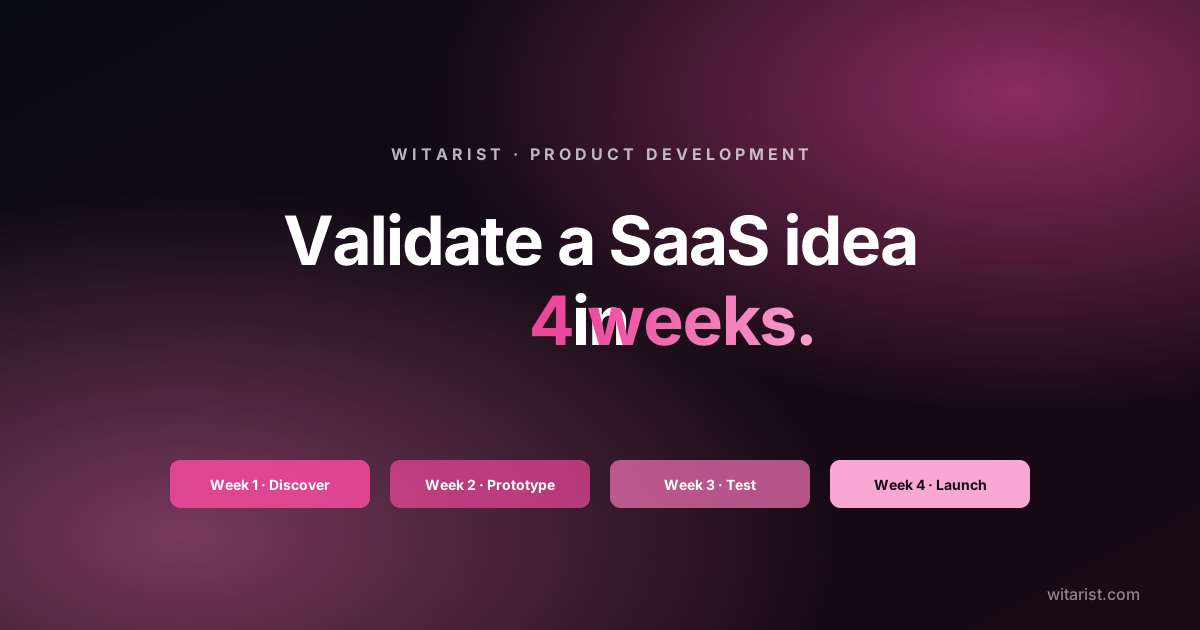
Most SaaS ideas die one of two ways: built before validated, or validated forever, never built. The first wastes 6 months and $100K. The second wastes a year and a co-founder. The middle path — 4 focused weeks of structured validation — separates the founders who ship from the ones who pivot indefinitely.
The four-week framework
Each week answers ONE question. If the answer is no, you stop. If it's yes, you advance to the next week. Don't skip — even when you're convinced. Especially when you're convinced.
Week 1 — Discover
Question: Does the pain exist outside your own head? Talk to 12 prospective users. Not friends. Not LinkedIn 1st-degree connections. Cold outreach to people who match your ICP. Ask about their current workflow, not your solution. If 8+ describe the same pain unprompted, advance.
Week 2 — Prototype
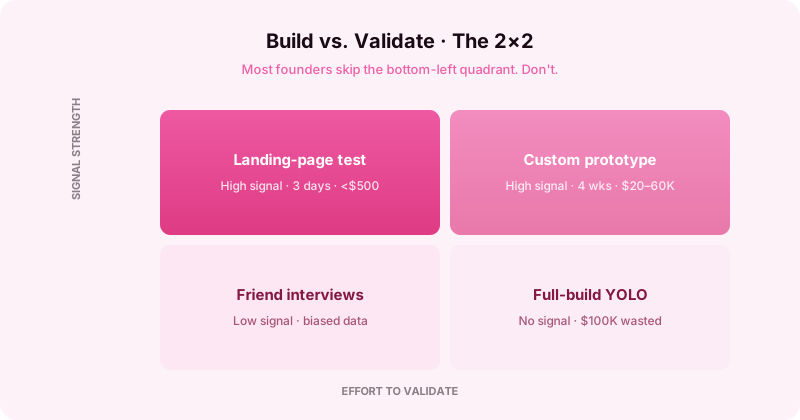
Question: Will they pay for a fix? Build a landing page — not the product. One headline, one screenshot or wireframe, one CTA: "Pay $1 to be first in line." Run $300 of LinkedIn or Reddit ads at the ICP. Conversion above 3% is signal. Below 1% means the message is wrong (which is recoverable) or the pain isn't sharp enough (which isn't).
Week 3 — Test
Question: Can a 1-day prototype solve the pain? Build the smallest possible thing — Airtable + Zapier, a Notion form, a no-code Bubble app. The goal is a Wizard of Oz test: backend can be a human in a Slack channel for now. If 5+ users use it twice in a week, advance.
Week 4 — Launch
Question: Will the engineering effort be worth it? Now you scope the real build. With 12 user interviews, 30+ landing-page conversions, and 5+ active users on a stitched prototype, the engineering team has a brief that won't change three weeks in. That's the difference between a project that ships in 4 months and one that ships in 14.
Common shortcut: skip Week 2
The biggest temptation is jumping from Week 1 ("the pain is real") to Week 3 ("let me prototype"). Don't. Week 2's landing-page test is the cheapest way to detect pricing/positioning bugs. A single conversion-rate read tells you whether your messaging works in 72 hours and $300 — versus discovering it's broken three months and $80K into the build.
// Sample tracking pixel for the landing-page test.
// Drop this on the post-CTA "thank you" page.
fetch("https://your-analytics.example.com/event", {
  method: "POST",
  headers: { "Content-Type": "application/json" },
  body: JSON.stringify({
    event: "landing_page_conversion",
    plan: searchParams.get("plan") ?? "founder",
    referrer: document.referrer,
    utm_source: searchParams.get("utm_source"),
    timestamp: Date.now(),
  }),
});
What to actually build in Week 4
Three deliverables, in priority order:
- Auth + onboarding — the spine of any SaaS. Don't skimp.
- The single core workflow — whatever your 5 active prototype users used twice. Not feature parity with anything.
- Stripe + a $1 test plan — proves the payment loop works before you offer real pricing.
If your team can't ship those three in 8 weeks, the scope is too big or the team isn't right. Talk to Witarist's product-development team — we ship MVPs in 8–12 weeks with fixed-price milestones.
Frequently Asked Questions
That's the framework working as intended. You've saved 3+ months and $50K+ by killing the wrong idea fast. Most founders treat negative signals from interviews as something to argue with — they're not. Move on, the next idea is better.
Ready to ship your validated MVP?
We build SaaS MVPs in 8–12 weeks with fixed-price milestones. From validated brief to production launch.
See Our Product Development →